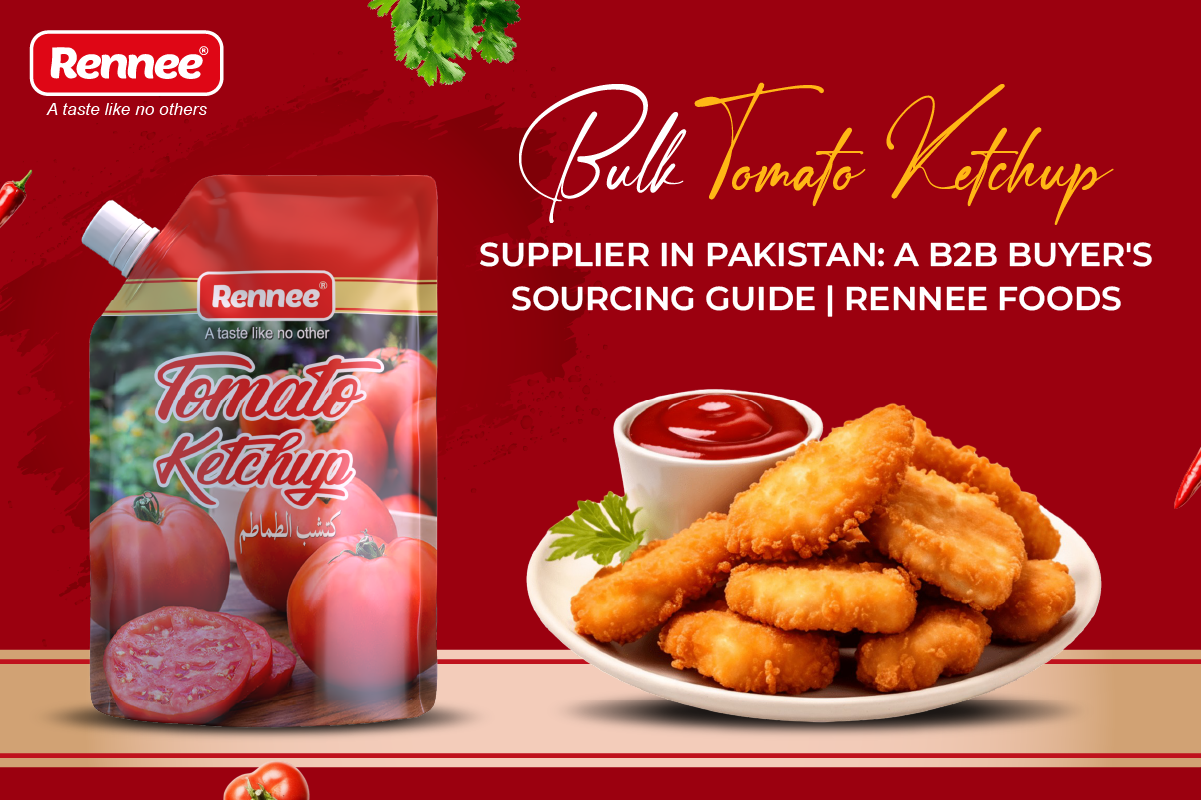
If you run a restaurant chain, distribute food products across Pakistan, or stock retail shelves, the tomato ketchup that you source can affect almost three things at once: your customer’s experience, food cost, your margin, etc. Choosing the bulk tomato ketchup supplier in Pakistan is a hard decision, because the grocery run and criteria can be completely different from what a home cook cares about.
This guide helps you decide what to evaluate even before you commit to a supplier. The batch consistency, packaging format, ingredients quality and food safety certification, minimum order quantity and shelf life, etc. It’s also written for the food service (HORECA) buyers, as they are retail category managers and distributors in need of volume, reliability and terms they can build business upon.
Why Ketchup Sourcing Is A Bigger Decision Than It Looks
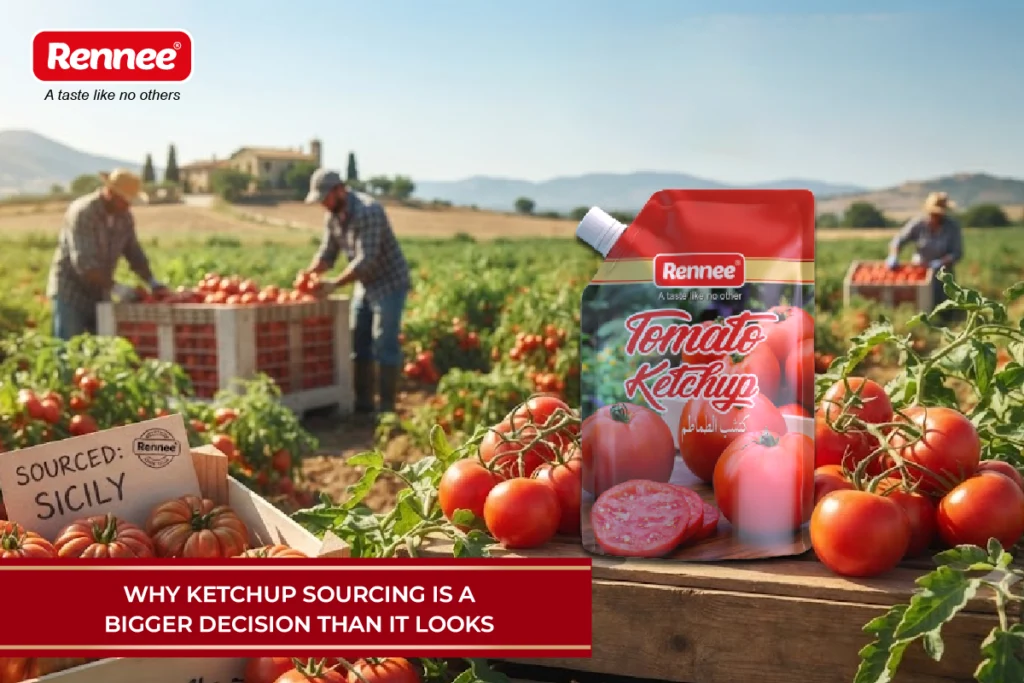
Ketchup is highly simple; it’s also the highest-turnover condiment in any kitchen or retail shelf. This means a small problem that repeats a thousand times. A batch that is too thin, too sour, or shades off in colour can just disappoint once it shows up on every plate and in every complaint until the stock runs out.
For Rennee Foods, consistency is a key factor in building trust with B2B buyers. Just like a restaurant or QSR needs every burger and fries to taste identical in June and July, food suppliers must ensure the same quality, flavor, and performance in every batch. For retailers, this means reliable shelf performance and fewer returns, while distributors depend on suppliers whose products protect their reputation with every account they serve. This is why serious B2B buyers evaluating Rennee Foods look beyond the price sheet and focus on the supplier’s quality control processes, production standards, and commitment to consistency.

Get Your Bulk Ketchup Quote Today
Whether you’re supplying a restaurant chain, hotel kitchen, or retail shelf, we deliver tomato ketchup in bulk at wholesale rates. Share your quantities and packaging needs, and we’ll send a tailored quote.
What To Look For In A Bulk Ketchup Supplier
You can use the checklist once you shortlist and audit the suppliers.
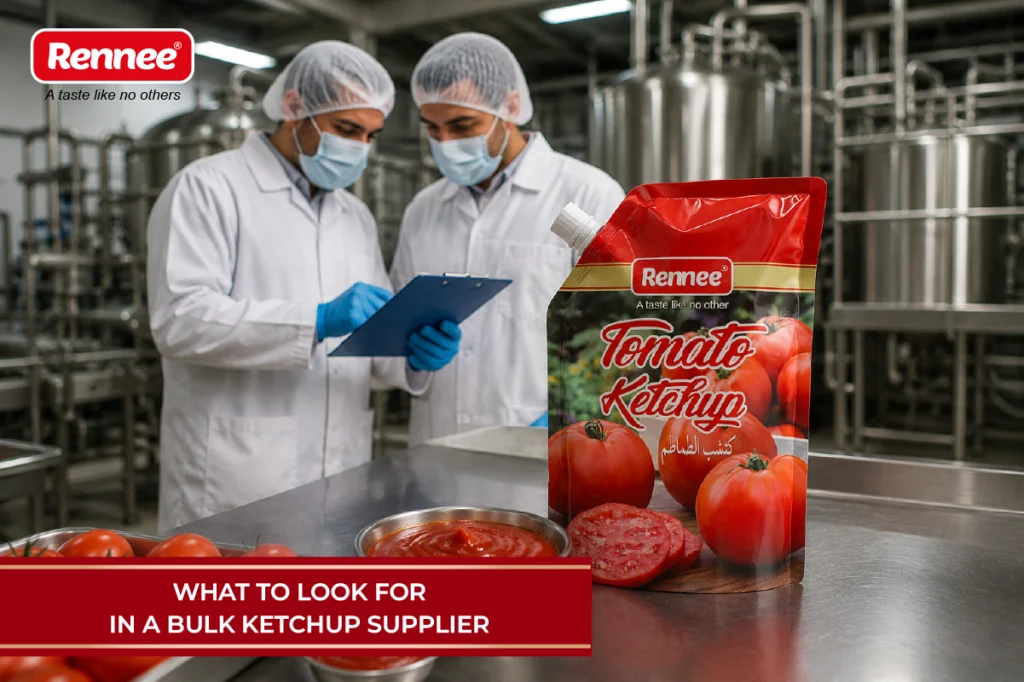
1. Batch-To-Batch Consistency
You can ask the supplier to control consistency across the production runs. The things that need to be standardized in every batch.
Colour: having a stable, appetizing red, drifting brow, or a pale between lots of it.
Viscocity/ Pourability: This is thick enough to cling, and watery. This also matters for more people who think about plate appeal or portion control.
Flavor Balance: Its sweet tang ration needs to be locked and not left to chance.
A supplier who can explain their quality-control process (and show batch records) can be a different proposition from the ones who can’t.
2. Ingredient Quality and Tomato Content
Say, not all the tomato ketchups are built the same; the higher tomato solids can mean richer flavor and better body. There are questions you can worth asking.
What is the tomato content/ base, like tomato paste, and the concentration?
What are the sweeteners and acidity regulators that are used at the same levels of concentration?
Are there any preservatives used within approved limits and disclosed on labels?
You don’t need to become a food technologist, but more as a supplier who can answer these questions much more clearly, like demonstrating transparency and long-term partnership.
3. Packaging Formats Matched to Your Operation
This is when B2B sourcing can diverge from retail; the right format now depends entirely on who you are.
Restaurants and QSRs: Bulk purchases, gallon jars, and large squeezes for bottles and kitchen use, along with an optional sachet for delivery, dine-in that matters for hygiene and delivery.
Retailers: The consumer-facing bottles (glass and PET), in a size that your shelf or customer can expect, that comes with clean labelling and barcodes.
Distributors: This is a mixed case of configurations, carton counts, and pallet specs that can make warehousing supply efficient.
Before you can talk about price, you can confirm with the supplier the format and the pack size that your channel may actually need. A great product in the wrong pack can have a logistic problem that’s waiting to happen.
4. Food Safety And Certification
Condiments are a food safety-sensitive category, which is why this is non-negotiable for any kind of credible buyer. You can ask the supplier and let them provide you with documentation for:
- Halal Certification: essential for the Pakistani market and most export destinations.
- Food-Safety Systems: such as HACCP or ISO 22000, if they hold them.
- Manufacturing Licensing: and any relevant provincial food authority (e.g. PFA/PSQCA) compliance.
Documented food safety isn’t a risk protection for a distributor or a retailer, as it’s a part of what you are selling.
Shelf Life and Logistics:
For anyone who’s holding inventory, shelf life can affect working capital and lead to waste.
The stated shelf life from date of manufacture, and typical remaining shelf life on delivery.
Storage Requirements: it’s before and after opening.
Lead times: a supplier’s ability to hold consistent stock and ensure reliable supply, as it’s often worth more than a marginal price.
6. Minimum Order Quantity, Pricing and Terms
The commercial fit is as follows:
MOQ: it matches storage capacity and turnover; too high can tie up the cash and too low might not get good pricing.
The pricing structure is tiered by volume, which is stable enough to plan on margins and menus around.
Payment and delivery terms: to know if they will suit the ongoing supply relationships instead of one-off.
Reliable Bulk Ketchup Supply, Order After Order
Stop worrying about stockouts and inconsistent quality. Partner with a trusted B2B ketchup supplier in Pakistan and keep your kitchen or shelves reliably stocked.
Don’t Overlook The Chilli Garlic Ketchup
Tomato ketchup is rarely bought alone, so, in Pakistan food services, especially chilli garlic ketchup is a near-universal companion on rolls, fried chicken, chowmein and BBQ.
You can source them both if one supplier simplifies the consolidation, procurement, deliveries, and often improves the pricing on combined volume. So, if you are evaluating a ketchup supplier, you can ask what else in the condiment range they can supply through the same door.
Red Flags When Choosing A Ketchup Supplier
You need to carefully do business if you see any of these signs:
- There’s no willingness to share the batch samples even before you commit.
- Inconsistent history of supply with frequent stockouts.
- Vague and missing answers on certifications and ingredients.
- Only one packaging format; there’s no flexibility for the channel.
- Pricing that may swing unpredictably between orders.