Green chutney is one of the items that nobody may order by name, but they notice when it’s off. If it’s too runny, it may soak the plate; if it’s too bland, the chaat feels off. The batch-to-batch inconsistency and the regular can taste different even before your kitchen team does.
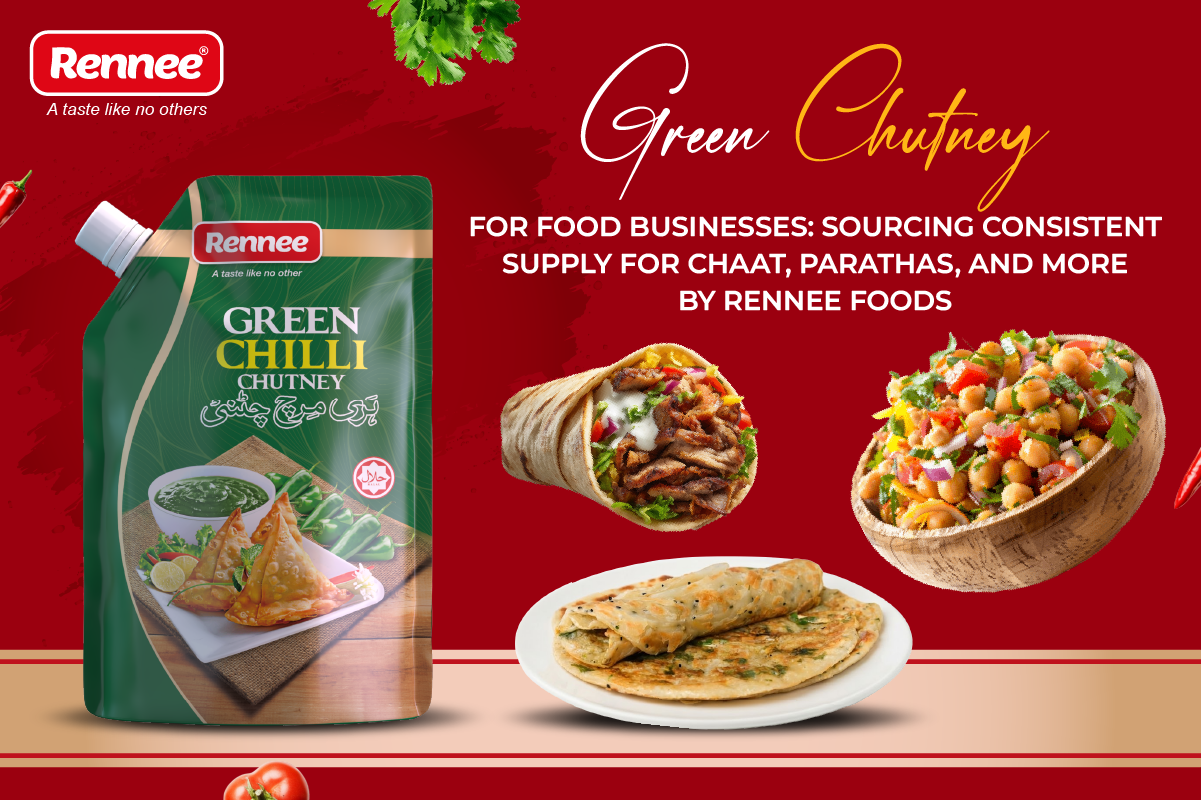
For any food business that is running volume, such as a chaat counter, a cloud kitchen, a caterer, QSR chain or a retailer building a private label range. Green chutney by Rennee foods can be a good supply chain decision. This guide helps you look at green chutney the way a purchasing or operations lead may. Especially when it earns its place on the menu or how the spicier green chutney fits in. What matters the most is when you’re buying it in kilos instead of spoonfuls.
What Green Chutney Is (and Why B2B Buyers Treat It Differently)
At its base, a green chutney is a blend of fresh mint and coriander that are sharpened with lime, amchur, salt and green Chilli, and sometimes balanced with sugar and roasted cumin.
It’s simple to describe, and can be hard to standardize.
In a home kitchen, the variation is a part of the charm. For any commercial kitchen, the variation can be the cost. So, every time a line cook grinds a fresh batch, you will be paying for the prep labor, absorbing yield loss on herbs that wilt fast and gambling on consistency across shifts.
That’s the core reason food businesses move from in-house grinding to standardized green chutney supply. Like predictable flavor, staff freed up for higher-value tasks and predictable cost.
You are evaluating green chutney as a bought-in product instead of a recipe: here are the three things that move to the front.
Consistency
You get the color, texture and heat in every pack, batch after batch.
Shelf Life and Stability
You get the thirty-day shelf life without the color browning or flavor dulling, as the herb-based chutney can oxidize quickly.
Format Fit
You get the right kind of viscosity, pack size and how you will use it, like a squeezing bottle, bulk pouch and tub.
Green Chutney For Chaat: The Flavour That Carries The Plate
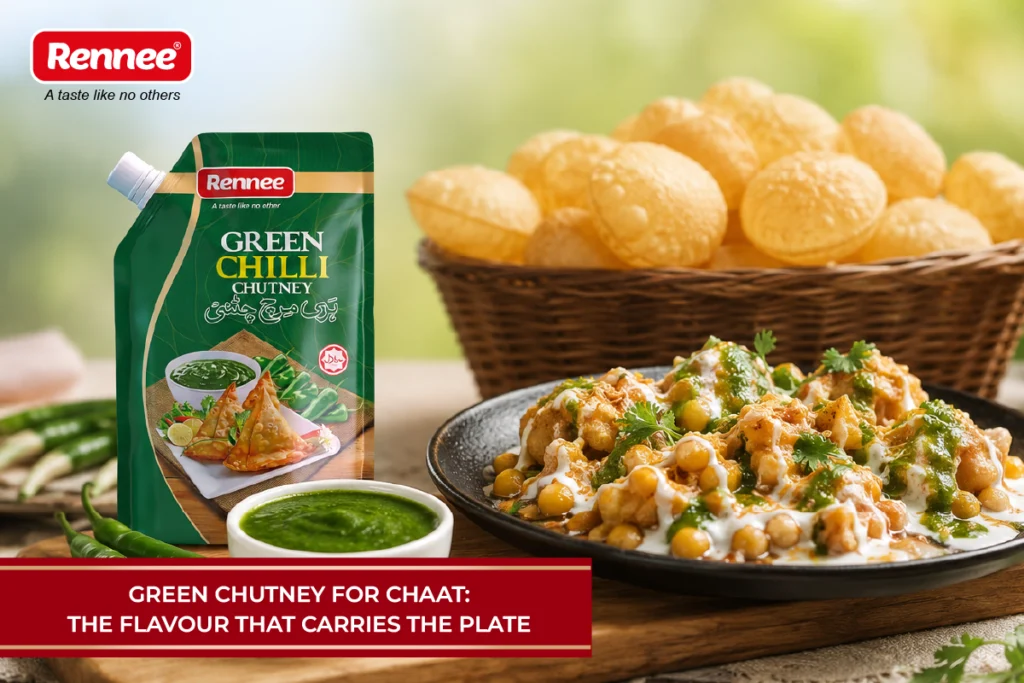
Chaat is when the green chutney is mostly useful: on a plate of pani puri, dahi vada, green chutney, sev puri, it can be the sharp counterweight to the sweet tamarind chutney and the cooling yoghurt.
You can get the balance right and whole plate that can read as bright and layered.
For a chaat counter, a dessert and snack concept, having the right Green Chutney for Chaat is essential. It should deliver the specific flavour profile every chaat needs—assertive coriander-mint freshness, enough heat to register, and balanced acidity without overwhelming the other components.
Texture Matters Too: smooth enough to drizzle, squeeze, thick and not to pool.
If we consider it from an operations angle, the chaat volumes can spike (evenings, festivals and weekends), so a ready-to-use green chutney can pour straight from a bottle and remove the bottleneck where the line is busiest. The practical case for sourcing instead of just grinding. Our team assembles a faster and flavorful profile that stays identical.
Green Chutney For Paratha, Rolls, And Wraps by Rennee Foods
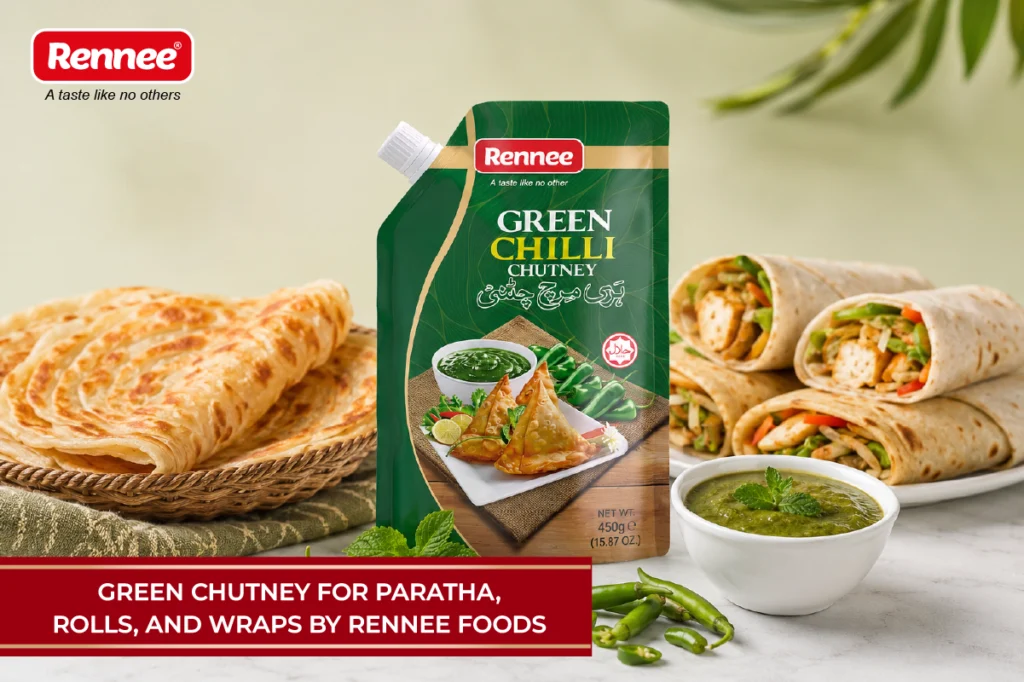
Moving from chaat counter to the roll station, green chutney changes the job. Here’s a spread and not just a drizzle. Like green chutney for paratha, frankies, kathi rolls, and sandwiches have to hold the place or brush it inside the laccha paratha. One can even layer it into an egg or paneer roll: This points to a different spec than a chaat version:
● Thicker Body
As it spreads and clings instead of just running out of the wrap.
● Balanced Heat
It complements the filling instead of fighting it.
● Delivery-Friendly Stability
A huge share of paratha rolls and wraps can travel through aggregators. The chutney can’t separate or weaken in the box.
For the cloud kitchen, QSRs are building menus around rolls and stuffed pathas. A consistent green chutney is the highest-level ingredient on the line. It can touch every SKU, so the quality compounds come across the whole menu.
Green Chilli Chutney: The Hotter SKU Worth Stocking Separately
The green chilli chutney is a close cousin, but it’s a different product and a smart second SKU to carry. The standard green chutney leans on coriander and mint for freshness; green chilli chutney foregrounds and is hotter, more pungent, and sometimes built with garlic for a punchier and thicker taste.
Stocking it all separately gives the flexibility without any extra preparation.
Mild green chutney:
This is good for guests, dishes and for you if you want brightness over the burn.
A Green Chilli Chutney
This is for heat seekers, sandwiches, vada pav or as a table condiment when customers can self-serve the spice.
For private label buyers, and retail offering both a fresh green chutney and a hotter green chilli chutney can help you cover both shelf positions and customer segments with the supplier relationship.

Get Your Bulk Supplies at Rennee Foods
At Rennee Foods, we supply ready-to-use green chutney and green chilli chutney built for food-service consistency
What To Look for in a Green Chutney Supply Partner
If you are moving green chutney from the prep list to the purchase order, here’s a practical checklist for evaluating suppliers:
Batch Consistency
You can ask how to control the colour and heat across batches. Herb chutneys can drift easily; a serious manufacturer needs a spec sheet, not just the recipe.
Shelf Life and Cold-Chain Requirements
Confirm the shelf life, storage temperature, and whether it retains color and flavor throughout the window.
Clean-Label and Food Safety
You can look for the certifications that your market and channel expect, like [FSSAI/HACCP/ISO 22000] and clarity on preservatives and additives.
Format And Pack Sizes
You can match the format to the use case, like squeeze bottles for chaat and roll station, bulk pouches or tubs for high-volume kitchen and retail-ready packs for shelf.
Customization
If you ever need a specific heat level, thickness or a private label formulation, you can ask if they will tweak the recipe and what volumes it requires.
Supply Reliability
Herbs are seasonal and perishable; a partner who can hold a consistent flavor year-round can be more worthy than the lowest unit price.